
Choosing the right swim safety gear is more than good parenting; it’s essential.
Drowning is the leading cause of unintentional injury-related death for children ages 1 to 4.
The majority of these drownings happen in residential swimming pools, often during a short lapse in supervision.
A toddler can slip underwater in less than 30 seconds, often without a sound.
Arm floaties and inflatable toys can reduce the risk of drowning, but not prevent it entirely.
That said, we’ve listed some of the best swim safety gear to help build your toddler’s confidence in the water and make your job of instruction or supervision easier.
Why Swim Safety Gear Is a Must for Toddlers
Toddlers are naturally curious and love exploring their environment. The pool may be particularly attractive to them, especially during the dog days of summer.
However, as mentioned, drowning is a leading cause of injury-related death for children under five. Proper safety gear can be a lifesaver in many cases.
Swim safety gear serves three primary purposes:
- Provides buoyancy to keep toddlers afloat.
- Encourages safe water habits and builds confidence.
- Gives parents and caregivers more control in unpredictable water environments.
But with so many options available, how do you know what offers the best protection?
Features to Look for in Swim Safety Gear
- Poorly fitted gear can slip off or irritate your toddler’s skin. Look for adjustable straps and soft materials.
- Ensure the item has adequate buoyancy to keep your toddler’s head above water without cramping their movement.
- Check for safety certifications, like the US Coast Guard-approved label for flotation devices.
- You don’t want something that takes forever to adjust! Ease of use matters when you’re dealing with a toddler!
- Choose gear with high-quality, non-toxic materials that will last through multiple seasons.
- Bright colors and reflective materials make spotting your child in a crowded or dimly lit area easier.
Types of Swim Safety Gear for Toddlers
1. Life Jackets
A life jacket is one of the safest options for toddlers, designed for maximum buoyancy. It’s a must for boating or open-water activities.
Best for
Lakes, ocean trips, and any activities where the water depth exceeds two feet.
What to Look for
- US Coast Guard-approved labels.
- Proper fit based on your child’s weight (commonly 30–50 lbs for toddlers).
- A strap between the legs to prevent the life jacket from slipping off.
2. Arm Floaties
Popular and convenient, arm floaties are inflatable bands worn on the upper arms to keep toddlers afloat. However, they’re not a substitute for a life jacket.
Best for
Shallow water environments like kiddie pools.
What to Look for
- Double air chambers for added security.
- Non-toxic materials (PVC-free when possible).
- A snug fit that won’t easily slide off.
3. Swim Vests
Swim vests offer more mobility than life jackets while still providing buoyancy.
Best for
Learning to swim in controlled environments like pools.
What to Look for
- Foam padding for consistent buoyancy.
- Adjustable straps for a secure fit.
- Bright colors for visibility.
4. Puddle Jumpers
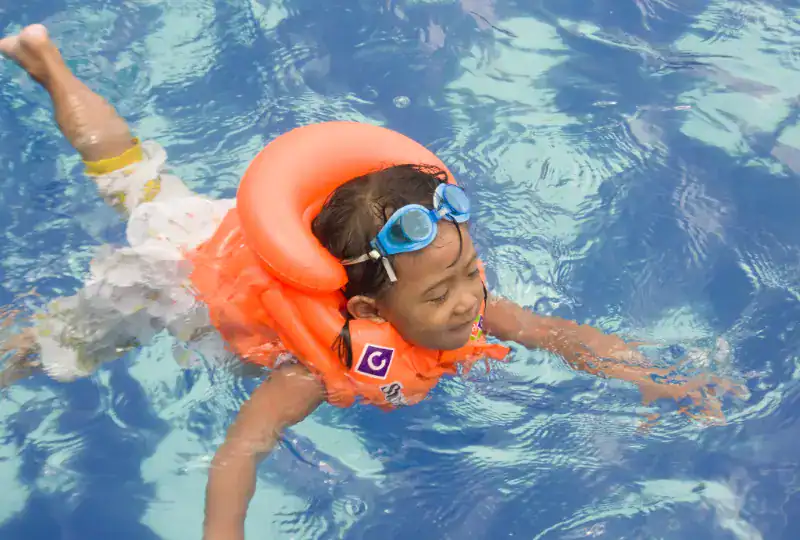
Puddle jumpers are a hybrid of a life jacket and arm floaties. They’re designed for toddlers who need extra stability and keep the torso and arms above water.
Best for
Beginner swimmers and casual pool play.
What to Look for
- US Coast Guard certification.
- Soft, comfortable fabric that won’t irritate the skin.
- Easy-to-use buckle system.
5. Swim Rings
Swim rings are inflatable devices that toddlers sit or cling onto, offering support in shallow water. While fun, they’re not as secure as other options.
Best for
Supervised play in shallow water.
What to Look for
- Sturdy materials resistant to punctures.
- A wide base to prevent tipping.
- Handles for extra grip.
6. Float Suits
These swimsuits have built-in flotation foam, offering a good balance of safety and freedom for toddlers learning to swim.
Best for
Parents looking for a low-profile solution for pool play.
What to Look for
- A snug yet comfortable fit.
- Durable construction that can withstand rough play.
- Lightweight foam that doesn’t restrict movement.
- Adjustable buoyancy levels for different skill levels.
7. Water Shoes
Water shoes don’t help with swimming, but they prevent slips and protect little feet from hot sands, sharp stones, or pool edges.
Best for
All types of water activities.
What to Look for
- Non-slip soles.
- Quick-dry materials.
- A snug fit.
8. Safety Goggles
Goggles allow toddlers to see underwater and stay comfortable during pool play.
Best for
Pool swimmers.
What to Look for
- Adjustable straps.
- Anti-fog lenses.
- UV protection for sunny pool days.
Water Safety Tips for Parents
- Always supervise toddlers around water, even if they wear safety gear.
- Practice water familiarity at home with bath play to increase comfort in pools or lakes.
- Enroll in swim lessons early to build confidence and skills.
- Check for wear and tear on all safety gear before every use.
- Keep a first aid kit and emergency contact numbers handy.
FAQs: Swim Safety Gear
Q: What’s the best swim gear for a 2-year-old?
That depends on the activity. A puddle jumper or swim vest is ideal for pools. In open water, always opt for a US Coast Guard-approved life jacket.
Q: How do I know if swim gear fits properly?
Ensure it’s snug without being too tight. When the straps are fastened on life jackets, you should not be able to lift them over your child’s head.
Q: Are puddle jumpers safe for pools?
Yes, puddle jumpers are an excellent option for controlled environments like pools, but they should never replace active supervision.
Q: Can toddlers use inflatable swim rings safely?
Inflatable rings are best for play under strict adult supervision. They should not substitute for puddle jumpers or swim vests.
Q: How long can toddlers wear swim gear?
Check your child’s comfort and the manufacturer’s guidelines. Avoid overly long wear that could lead to irritation or overheating.
Q: Are swim vests better than arm floaties?
Swim vests provide more buoyancy and body support than arm floaties, making them safer for beginners.
Q: How do I clean swim gear?
Rinse off chlorine, sand, or saltwater with fresh water. Dry thoroughly before storing.
Q: Is swim safety gear enough to prevent drowning?
While it significantly reduces risk, nothing replaces vigilant adult supervision around water.
Leave A Comment