
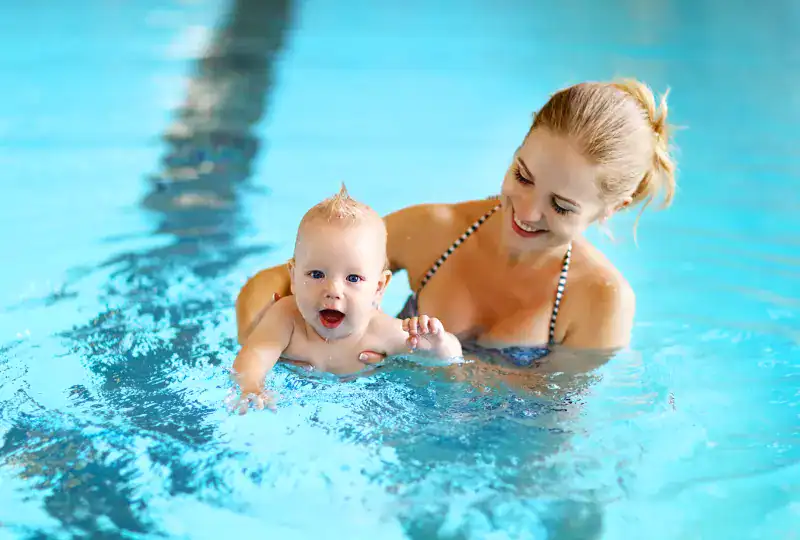
Did you know that babies are born with a “swim reflex?” Infants under 6 months naturally hold their breath and move their arms and legs in water — a primitive reflex known as the bradycardic response. It fades by around 6 months, making early water exposure feel intuitive.
Toddlers can learn to float before they can walk well. Some toddlers as young as 12–18 months can learn to roll over and float — a key survival skill, even if they can’t yet swim.
And if you still need convincing to start those swim lessons, consider this: According to the NIH, formal swim lessons for children ages 1–4 can reduce drowning risk by up to 88%, but they must be paired with close supervision for proper safety.
Why Start Teaching Your Toddler to Swim Early?
Beyond the lessons of pool safety, here’s why starting to swim early is a great idea:
- Kids who spend time in water from a young age often feel more at ease as they grow.
- Kicking, paddling, and floating help improve coordination and muscle strength.
- Swimming lessons with other toddlers teach cooperation and shared play skills.
- Early swimming can instill a love for physical activity that lasts a lifetime.
Most toddlers aren’t afraid of water until they associate it with negative experiences like forced dunking or slipping. Positive, playful exposure prevents water anxiety later.
Getting Started
Teaching your toddler to swim doesn’t require professional equipment, but you’ll need a few essentials.
What You Need Before Lessons Begin
- Swim diapers (if your toddler isn’t potty-trained). Note: swim diapers don’t hold pee! Pool hygiene depends on frequent changes.
- Comfortable swimwear that allows free movement.
- Flotation aids like a kickboard or pool noodle. Avoid relying on flotation devices like floaties during teaching.
- Swimming location with shallow areas to practice, such as a pool with a ledge.
The water temperature should be warm enough to keep your child comfortable. Always supervise closely, even in shallow water.
Methods for Teaching Toddler Swimming
1. Familiarize Them with Water
- Gradually introduce the pool by splashing water on their hands and feet.
- Get into the water and hold your toddler, showing them it’s a safe space.
- Use toys like rubber ducks or small balls to make it feel like playtime.
Pro Tip
If they seem nervous or scared, avoid forcing them. Ease into it with encouragement.
2. Practice Submerging
Submerging teaches toddlers to control breathing and become more comfortable underwater.
- Wet their face gently and encourage them to blow bubbles.
- When they’re ready, show them how to hold their breath and dip their face in the water briefly.
- Never dunk them abruptly; keep it gradual and playful.
3. Teach Floating on Their Back
- While supporting their head and lower back, guide your toddler into a floating position.
- Reassure them the whole time and avoid taking your hands off too soon.
- Practice until they become comfortable lying still on the water.
4. Introduce Basic Kicking
- Have them sit on the pool’s edge and kick their legs in the water as practice.
- Once in the pool, hold them under their arms and encourage light kicks.
5. Start Arm Movements
Demonstrate simple arm paddles or scoops.
- Many toddlers mimic “doggy-paddling” naturally after observing adults.
- Combine arm movements with light kicks to create basic swimming motions.
6. End Each Session Positively
Building a love for swimming depends on positive associations.
- Always end lessons with lighthearted activities like playing with toys or floating together.
- Celebrate small wins, whether blowing bubbles or dipping their face in water.
Consistency is crucial. Regular, short sessions work better than occasional long ones.
Safety Tips for Toddler Swimming
- Always maintain touch supervision (stay within arm’s length of your toddler).
- Never rely solely on flotation devices or life vests for safety.
- Make sure your pool at home is gated and childproofed.
- Enroll in a CPR class for parents so you’re prepared for emergencies.
Enrolling in toddler swimming classes is the best option for parents ready for professional support. Swimming schools like Blue Buoy have specialized programs for infants and kids guided by certified instructors.
FAQs: Teaching Toddlers to Swim
Q: At what age should I start teaching my toddler to swim?
Babies as young as six months can be introduced to water for fun, but structured lessons can start at one to two years old.
Q: What’s the best way to overcome their fear of water?
Ease your child into water activities gently and avoid forcing them. Start with play-based interactions like splashing or using pool toys.
Q: Should I use floaties or flotation devices?
It’s better to focus on teaching natural swimming movements. Over-reliance on floaties can hinder learning.
Q: How do I make swimming more fun for my toddler?
Use toys, sing songs, or create games like “treasure hunts” with sinking toys in shallow water.
Q: How long should toddler swimming sessions be?
Keep lessons short and sweet, around 15–20 minutes, depending on your child’s mood and energy.
Q: Should I hire a professional instructor?
Hiring a professional can speed up progress, but parent-led sessions are equally beneficial, especially when incorporating proper methods.
Q: What’s the recommended water depth for toddler sessions?
A shallow pool or area with a depth of about 2–3 feet is ideal for toddlers to practice safely.
Q: How long will my toddler take to learn basic swimming skills?
Every child is different, but with regular practice, kids can acquire basic water familiarity and floating skills in a few weeks.
Leave A Comment