
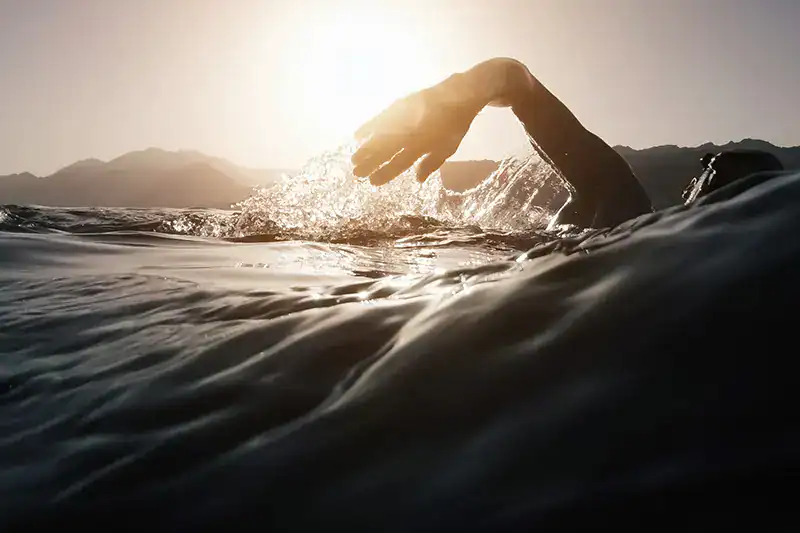
Open water swimming is nothing like swimming laps in a pool. There are no lane lines, no walls for rest, and no perfectly calm water. Instead, you face waves, wind, cold temperatures, currents, and changing visibility.
Training for open water swimming takes more than endurance.
You also need strong technique, confidence in unpredictable conditions, and a solid safety plan. This guide covers how to build all three so you can swim outdoors with more skill and confidence.
Why Open Water Training Is Different
Pool fitness helps, but it doesn’t fully prepare you for lakes, oceans, rivers, or reservoirs.
Open water swimming asks more from you because:
- You must sight to stay on course
- Water conditions can change fast
- Cold water can affect breathing and muscle control
- Waves and chop can break your rhythm
- You may feel anxious without clear visual markers
That means your training should include both physical work and skill work. You’re training to swim farther and stay calm, efficient, and safe in an unpredictable setting.
Start With a Strong Pool Base
Before you head to open water, build a good base in the pool. This gives you fitness and technique without the added stress of weather and rough water.
Focus on these basics:
Build Aerobic Endurance
Open water swimming often means long, steady efforts. Start by gradually increasing your total weekly swim volume.
A simple approach:
- Swim 2 to 4 times per week
- Increase the distance slowly
- Include one longer swim each week
- Keep most sessions at an easy to moderate pace
Example pool session:
- 300 easy warm-up
- 4 x 100 moderate with short rest
- 3 x 300 steady pace
- 4 x 50 easy recovery
- 200 cool-down
The goal is to build a steady engine.
Improve Stroke Efficiency
In open water, wasted motion costs exponentially more energy. A smooth, relaxed stroke matters more than raw power.
Work on:
- A long body line
- A relaxed recovery
- A balanced body position
- Bilateral breathing, if possible
- A steady kick that supports, not exhausts, you
You don’t need a perfect stroke, but one that holds up when conditions get messy.
Practice Continuous Swimming
Pool swimmers often stop at the wall. Open water swimmers don’t get that reset.
Add sets that reduce rest and mimic nonstop movement, such as:
- 1 x 1000 steady
- 2 x 800 with 20 seconds rest
- 3 x 500 at a sustainable pace
This helps your body and mind adjust to longer efforts.
Train the Skills You’ll Use Outside
Once you have a good swimming foundation, start adding open-water-specific skills.
Learn to Sight Without Killing Your Rhythm
Sighting means lifting your eyes forward to see where you are going. If you lift your whole head too high, your hips drop, and you slow down.
Practice this in the pool:
- Every 6 to 10 strokes, look forward briefly
- Keep one goggle in the water if possible
- Return your head smoothly into your normal breath pattern
A common method is “alligator eyes.” Let your eyes rise just above the surface, then turn to breathe.
Get Comfortable With Pack Swimming
If you plan to race or join group swims, you’ll swim near other people. That can mean accidental contact, splashing, and disrupted rhythm.
Practice by:
- Swimming next to a lane partner
- Starting intervals at the same time
- Swimming close behind someone to feel the draft
- Staying calm when touched or crowded
The first few times may feel awkward. That is normal. The goal is to reduce surprise.
Practice Variable Breathing
In open water, waves may hit one side of your face. Sun glare may also make one side easier than the other.
Try to become comfortable breathing to both sides. Even if you favor one side, having options helps in rough conditions.
Acclimate to Open Water Conditions
Pool fitness doesn’t automatically translate into open-water confidence. You need real exposure to real conditions.
Start in Calm, Safe Water
Choose a beginner-friendly location with:
- Calm conditions
- Easy entry and exit points
- Good visibility
- Lifeguards or supervised swim groups
- Minimal boat traffic
Your first few sessions don’t need to be long. Even 10 to 20 minutes in open water can be instructive.
Adjust to Cold Water Gradually
Cold water can trigger a gasp reflex, making your breathing feel rushed. That is one of the biggest challenges for new open water swimmers.
To adapt:
- Enter slowly
- Splash water on your face before swimming hard
- Start with short swims
- Wear a wetsuit if conditions call for it
- Focus on long exhales to control breathing
Don’t treat cold water lightly. Even strong swimmers can struggle if they enter too fast and panic.
Learn How Currents, Wind & Waves Affect You
Conditions shape effort more than distance does.
For example:
- Swimming into a current takes more energy
- Side chop can disrupt breathing
- Wind can make sighting harder
- Swells may change your timing and body position
The best way to learn this is through experience. Start small. Pay attention. Build exposure over time.
Build Strength & Endurance Outside the Water
Dryland work supports better swimming. You don’t need a complicated gym plan, but a little strength and mobility training goes a long way.
Focus on:
- Shoulder stability
- Core strength
- Hip mobility
- Upper back strength
- General aerobic fitness
Helpful exercises include:
- Planks
- Band pull-aparts
- Rows
- Dead bugs
- Bodyweight squats
- Light dumbbell shoulder work
Two short sessions per week can help you stay stronger and more durable.
Create a Simple Weekly Training Plan
Here’s a basic plan for an intermediate beginner:
Sample Week
Monday
- Pool swim: technique and drills, 1,500 to 2,000 yards
Tuesday
- Strength training: 30 to 40 minutes
Wednesday
- Pool swim: endurance set, 2,000 to 2,500 yards
Thursday
- Easy cardio or rest
Friday
- Pool swim: continuous swim plus sighting practice
Saturday
- Open water swim: short to moderate session in safe conditions
Sunday
- Rest or mobility work
As your goal event or swim gets closer, make your training more specific. If you’re preparing for a one-mile swim, include efforts near that distance. If you’re training for longer swims, build volume gradually.
A common rule is to avoid sharp jumps in distance from week to week. Gradual progress is safer and more effective.
Safety Comes First
Open-water swimming is rewarding, but it comes with real risks. Safety is paramount.
Never Swim Alone
This is the most important rule.
Swim with:
- A group
- A coach
- A lifeguard present
- A kayak or paddle support
- A training partner who stays nearby
Even experienced swimmers follow this rule.
Use Visible Safety Gear
Wear gear that helps others see you.
Smart choices include:
- A bright swim cap
- A tow float
- A wetsuit in cold water
- Goggles suited to light conditions
A tow float also gives you something to hold if you need a short rest.
Know the Conditions Before You Go
Check:
- Water temperature
- Weather
- Wind speed
- Tides or current
- Water quality alerts
- Boat traffic rules
If conditions look questionable, skip the swim. There’s always another day.
Plan Entry and Exit Points
Before you get in, know:
- Where you’re starting
- Where you’re finishing
- What backup exit points are available
- What to do if you cramp, panic, or feel cold
Clear planning reduces risk and helps you stay calm.
Mental Preparation Matters Too
Open water can feel overwhelming at first. Dark water, distance, and unpredictability can create stress, even for the fit.
That is why mental training matters.
Try these strategies:
- Start with short swims
- Break longer swims into small targets
- Focus on steady exhalation when anxious
- Expect some discomfort without treating it as a danger
- Practice in familiar locations before trying new ones
Confidence builds session by session.
FAQs: Open Water Training
Q: How long does it take to train for open water swimming?
It depends on your current fitness and your goal distance. Beginner training for a short open-water swim may take 6 to 10 weeks. Longer events often require several months of steady training.
Q: Do I need to be a strong pool swimmer before trying open water?
You should be comfortable swimming continuously in a pool before moving to open water. You don’t need elite speed, but you should have basic endurance, breathing control, and confidence in deep water.
Q: Should I wear a wetsuit for open water swimming?
A wetsuit can help in cold water by adding warmth and buoyancy. In warmer water, it may not be needed. Always check local rules if you’re training for a race, since some events have wetsuit guidelines based on water temperature.
Q: How often should I practice in open water?
If you have regular access, once a week is a good start. Pool training can handle most of your fitness work, while open water sessions help you adapt to conditions, sighting, and pacing outside the pool.
Q: What is the best way to avoid panic in open water?
Start in calm water, swim with support, and ease in slowly. If you feel panic rising, roll to your back or breaststroke, focus on slow exhales, and regroup. Building familiarity over time is the best long-term fix.
Q: How do I train for swimming in waves?
Practice in controlled, open-water settings when conditions are mild. Work on bilateral breathing, timing your breath with the swell, and keeping your stroke relaxed. Don’t jump straight into rough water without experience.
Q: Is it safe to train alone with a tow float?
No. A tow float improves visibility and provides support, but it doesn’t replace a swim buddy, kayak escort, or a supervised setting. Open water swimmers shouldn’t train alone.
Q: What should I eat before an open water swim?
For shorter swims, a light meal or snack 1 to 3 hours before is often enough. Choose foods you tolerate well, such as toast, fruit, oatmeal, or yogurt. For longer sessions, hydration and extra fuel matter more.
Learn how to train for open water swimming with tips on endurance, technique, cold water, safety, and race-ready confidence.
Leave A Comment