

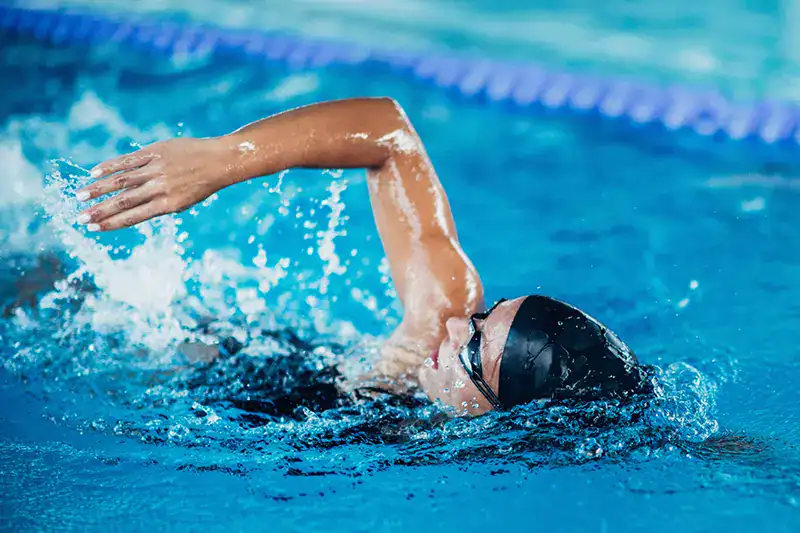
Swimming is one of the best low-impact exercises you can do. It boosts heart health, builds strength, increases flexibility, and supports overall wellness without placing excessive stress on your joints.
People of all ages, from kids to older adults, can benefit from swimming’s mix of fitness, mobility, and water safety skills.
An Exercise for Every Age
If your knees complain after a jog, your back grumbles after a workout, and your idea of exercise involves planning a recovery day, swimming might be the exercise you’re looking for. In the water, you can challenge your heart and muscles without stressing your joints. That’s one reason swimming remains a favorite exercise for everyone from energetic kids to active retirees.
It can be hard to find exercise that is effective, enjoyable, and easy on your body. Many popular activities, such as running, basketball, and tennis, repeatedly stress your knees, hips, ankles, back, and shoulders. Swimming is different. The water’s natural buoyancy supports your body while still providing resistance, so you can build strength and endurance without stressing your joints.
Whether you want a fun activity for your child, a full-body workout for yourself, or a comfortable way to stay active as you get older, swimming offers benefits that few other exercises can match.
Why Swimming Is So Good for Your Body
Swimming is one of the few activities that gives you cardio, strength training, and flexibility all in one workout. Swimming engages multiple muscle groups simultaneously, providing an efficient full-body workout that can be adapted to different fitness levels and goals.
Water supports most of your body weight, which takes pressure off your joints and spine. This makes swimming a great choice for people with arthritis, chronic pain, past injuries, or anyone who wants to stay active without extra strain.
At the same time, water gives natural resistance. Every stroke, kick, and movement makes your muscles work harder, helping you build strength all over your body.
Some of the key physical benefits of swimming include:
- Improved cardiovascular endurance.
- Increased muscle strength and tone.
- Better flexibility and range of motion.
- Improved balance and coordination.
- Enhanced lung capacity and breathing control.
- Reduced stress on joints and connective tissues.
Benefits of Swimming for Children
For children, swimming is more than just fun. It helps them grow strong and healthy while teaching an important life skill. Unlike some competitive sports, swimming lets kids move at their own pace and enjoy an activity they can keep doing for life.
Swimming helps kids improve coordination, balance, and motor skills. Kicking, reaching, floating, and breathing all help the body and mind work together, supporting healthy growth.
Swimming also helps children:
- Build confidence and independence.
- Develop strength and endurance.
- Improve focus and discipline.
- Stay active away from screens.
- Learn essential water safety skills.
Why Adults Benefit from Swimming
Many adults have trouble finding time to exercise or avoid workouts due to joint pain, old injuries, or busy jobs. Swimming is a great solution.
Swimming can raise your heart rate, build muscle, and burn calories, all while being gentle on your body. That’s why many adults choose it to get fit without the pounding of running or other high-impact workouts.
The steady rhythm of swimming can also help you relax, ease tension, and take a break from daily stress.
Adults often choose swimming to:
- Improve heart health.
- Build muscular endurance.
- Support weight management goals.
- Recover from sports-related injuries.
- Reduce stress and improve mental well-being.
- Complement other forms of exercise.
Swimming for Older Adults and People with Joint Pain
One of the best things about swimming is that you can do it at any age.
As people get older, arthritis, stiff joints, and reduced mobility can make some exercises more difficult. Swimming lets older adults stay active without the impact that can aggravate these problems.
Many healthcare professionals suggest swimming and water exercise as part of a healthy lifestyle. It helps people keep moving comfortably, even when other activities get tough.
The supportive properties of water help older adults:
- Maintain flexibility and mobility.
- Improve balance and coordination.
- Strengthen muscles that support the joints.
- Reduce discomfort during exercise.
- Support healthy circulation and cardiovascular function.
A Lifelong Activity for Health and Wellness
Swimming regularly helps you build endurance, improve your technique, and feel more confident in the water. It also helps you achieve the physical and mental benefits of exercise.
Whether you swim a few laps each week, join water aerobics, or take lessons to improve, being consistent is key to long-term success. Swimming strengthens your body, supports heart health, improves flexibility, and boosts mental well-being, all while being gentle on your joints.
Kids gain confidence and learn important water safety skills. Adults get a challenging full-body workout. Older adults can stay active and keep moving with less discomfort than many land exercises.
Whether you want to get fit, have fun, recover from injury, or just find an enjoyable way to stay active, swimming can support your health at any age.
FAQs: Swimming as a Low-Impact Exercise
Q: Is swimming better for your joints than running?
For many people, yes. Swimming is low-impact because water supports most of your body weight, which reduces stress on your knees, hips, ankles, and spine. Running is great for your heart, but it puts more impact on your joints.
Q: How often should I swim for exercise?
Health experts suggest getting at least 150 minutes of moderate exercise each week. Swimming two to five times a week can help boost your heart health, strength, and overall fitness.
Q: Can adults learn to swim?
Absolutely. People can learn to swim at any age. Adult swim lessons help you feel more confident in the water and improve fitness and water safety skills.
Q: Is swimming a good exercise for seniors?
Yes. Swimming is often recommended for older adults because it helps with mobility, heart health, strength, and flexibility, all while being gentle on aging joints.
Q: Does swimming help with arthritis and joint pain?
Many people with arthritis find swimming and other water-based exercises more comfortable than high-impact activities. The buoyancy of water helps reduce pressure on painful joints while allowing for movement and exercise.
Q: Does swimming help with weight loss?
Swimming can help with weight loss when paired with a balanced diet and regular exercise. It uses many muscle groups and raises your heart rate, so you burn calories while building strength and endurance. The number of calories you burn depends on your weight, how hard you swim, and how long you swim, but regular swimming can be a good part of a healthy weight plan.
Q: Is swimming a full-body workout?
Yes. Swimming works your arms, shoulders, back, core, hips, and legs simultaneously. The water’s resistance helps strengthen your muscles and build endurance.
Q: Do I need to be a strong swimmer to get health benefits?
No. Even beginners can get great benefits from swimming. Water walking, water aerobics, gentle lap swimming, and beginner lessons all help improve fitness and health.
Leave A Comment