

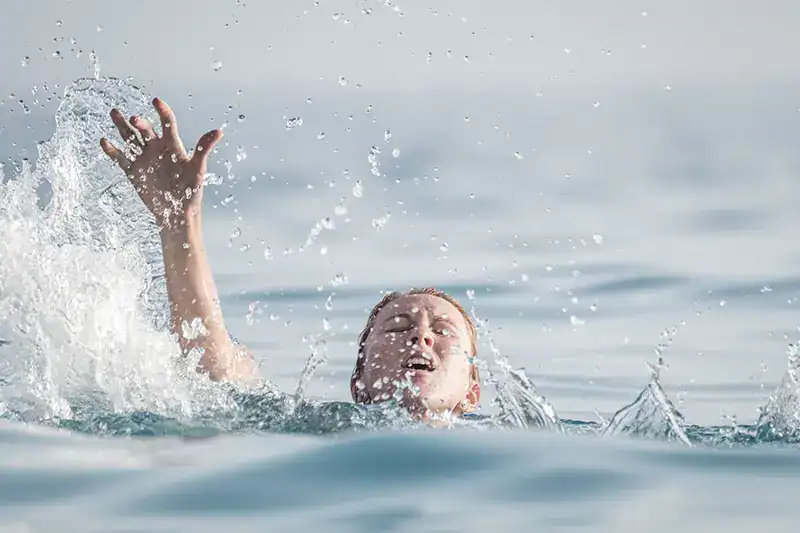
Drowning doesn’t usually look like it does on TV. People who are drowning often can’t wave, call for help, or stay above water for long.
Watch for a vertical body position, head low in the water, often tilted back, glassy eyes, and little or no leg movement. Spotting these signs early and knowing how to respond safely could save a life.
When Seconds Matter Most
Every summer, news stories tell the same heartbreaking story. Someone notices a swimmer in trouble, jumps in to help, and both people drown. In some cases, the victim survives while the would-be rescuer does not. It happens because drowning is fast, silent, and incredibly dangerous, even for strong swimmers.
Most people expect a drowning person to splash wildly, wave their arms, and scream for help. In reality, they’re usually unable to do any of those things. Recognizing the real signs of drowning—and knowing how to respond without putting yourself in danger—can make the difference between a close call and a tragedy.
Common Misconceptions About Drowning
Many people misunderstand what drowning looks like because of how it’s shown in movies and TV. In real life, drowning is usually quiet and difficult to notice. People who are drowning often can’t shout or wave because they are using all their energy just to breathe.
Another common myth is that strong swimmers can’t drown. But anyone can be at risk if they become exhausted, experience a medical emergency, get caught in a current, or encounter unexpected water conditions.
Every year, thousands of people die from drowning, and many are children. The World Health Organization says drowning is the third leading cause of unintentional injury death worldwide, accounting for about 7% of all injury-related deaths. Sadly, many drownings happen within sight of other people who simply don’t recognize the warning signs.
This guide explains the actual signs of drowning, what to do if you see them, and how to stay safe around water. Whether you’re a parent, swim instructor, or just spending the day at the pool, knowing the signs could help prevent a tragedy.
What Does Drowning Actually Look Like?
The term Instinctive Drowning Response, coined by Francesco Pia, PhD, describes the body’s automatic reaction when someone is about to drown. In this state, the body focuses on breathing above all else, even at the expense of calling for help.
Here’s what that looks like in reality:
- The mouth bobs at water level, sinking below the surface and rising just long enough to exhale and inhale, not long enough to call out.
- Arms press down on the water instead of waving in the air. The body instinctively uses the arms to lift the mouth above the surface.
- The body remains upright with little or no leg movement.
- The head tilts back, often with the mouth open.
- Eyes appear glassy, unfocused, or closed.
This response usually lasts only 20 to 60 seconds before the person slips beneath the surface. That’s a very short window to recognize what’s happening and respond.
How Is Drowning Different from Distress?
Not everyone struggling in the water is actively drowning. Aquatic distress is a separate stage where a person is still able to assist in their own rescue. Signs of distress include:
- Waving one or both arms
- Calling or yelling for help
- Floating on their back or treading water
Someone in distress can often grab a life ring, rope, or reaching pole. A person who is actively drowning usually cannot. The instinctive drowning response has taken over, leaving them focused only on getting their next breath.
It’s important to know the difference because it changes how you should respond. Whenever possible, stay out of the water yourself. Alert a lifeguard, call 911, and use the “reach or throw, don’t go” approach by extending a pole, towel, or flotation device. Enter the water only if you have proper rescue training and can do so safely.
What Are the Warning Signs in Children vs. Adults?
How to Spot Drowning Signs in Children
Children are especially vulnerable because they tire quickly and may panic more quickly than adults. Warning signs include:
- Playing normally, then suddenly becoming quiet.
- A head that’s low in the water or tilted back.
- Eyes that are glassy, closed, or unable to focus.
- Gasping or hyperventilating.
- Remaining upright with little or no kicking.
Many young children drown within arm’s reach of a parent or caregiver. Because distraction is a leading factor in drowning accidents, experts report that most drownings involving children ages 1 to 4 occur in home swimming pools.
How to Spot Drowning Signs in Adults
Adults may show additional warning signs before the instinctive drowning response begins:
- Swimming in an erratic or exhausted pattern.
- Stopping to tread water but struggling to move forward.
- Appearing disoriented or confused.
- Trying to reach a ladder, dock, or pool wall but making little progress.
Alcohol is a major factor in adult drowning deaths. According to the CDC, alcohol contributes to many fatal drownings among teens and adults because it impairs judgment, coordination, and reaction time.
What to Do if You Spot the Signs
If you think someone is drowning, don’t wait to see what happens. Act immediately.
- Alert a lifeguard immediately if one is present. Never assume they’ve already seen the person.
- Call 911 if no lifeguard is available.
- Throw something that floats, such as a life ring, kickboard, cooler, or any object that can provide buoyancy.
- If the person is close enough, extend a towel, a pool noodle, a reaching pole, or a rope.
- Don’t jump into the water unless you have water rescue training. A drowning person may unintentionally pull a rescuer underwater while struggling to breathe.
- If the person is unresponsive after being removed from the water, begin CPR immediately and continue until emergency responders arrive.
Preventing Drowning
The best rescue is the one that’s never needed. These simple habits can dramatically reduce the risk of drowning:
- Choose one Water Watcher. Designate an adult whose only responsibility is watching swimmers—no phone, no reading, and no conversations.
- Learn CPR. Quick action before emergency responders arrive can save lives.
- Wear Coast Guard-approved life jackets. They’re especially important for children, inexperienced swimmers, and anyone in open water.
- Establish and enforce pool rules. No running, roughhousing, diving into shallow water, or swimming alone.
- Enroll children in swim lessons. Formal swimming instruction can significantly reduce the risk of drowning in children ages 1 to 4.
- Keep rescue equipment nearby. A life ring, reaching pole, or shepherd’s hook should be easily accessible around home pools.
Take This Knowledge Into Every Trip Near Water
Drowning rarely looks dramatic. It happens quietly, often in less than a minute, and frequently in places that feel familiar and safe. Recognizing the warning signs—and responding quickly without putting yourself at risk—can save a life.
The next time you’re at a pool, lake, river, or beach, watch the water with fresh eyes. Designate a Water Watcher. Know where the nearest life ring or reaching pole is before anyone gets in the water. Learn CPR. Most importantly, remember that the safest rescue is often one made from dry land. Protecting yourself while helping someone else gives you both the best chance of making it home safely.
FAQs: Preventing Drowning
Q: What are the first signs that someone is drowning?
The earliest signs include a vertical body position, little or no leg movement, arms pressed downward rather than waving, a head tilted back, and an inability to call for help.
Q: Is drowning usually loud and obvious?
No. Most drowning victims are silent because they’re using all their energy trying to breathe. There is often very little splashing or shouting.
Q: What’s the difference between someone in distress and someone who is drowning?
A person in distress can usually wave, call for help, or grab a flotation device. Someone who is actively drowning typically cannot because the instinctive drowning response has taken over.
Q: Should I jump in to save someone who is drowning?
Not unless you have water rescue training. The safest approach is to alert a lifeguard, call 911, and use the “reach or throw, don’t go” method whenever possible.
Q: Why do people trying to rescue someone sometimes drown themselves?
A drowning person may instinctively grab onto the nearest person in an attempt to stay above water. Without proper training or flotation equipment, even a strong swimmer can be pulled under.
Q: Can someone drown in a hot tub?
Yes. Although hot tubs are shallow, drowning is still possible. People can lose consciousness because of a medical emergency, alcohol or drug use, overheating, or slipping beneath the water. Children should always be supervised around hot tubs, and adults should avoid using them alone if they’ve been drinking or have certain medical conditions.
Q: How quickly can drowning happen?
The instinctive drowning response may last only 20 to 60 seconds before a person slips beneath the surface, leaving very little time to recognize the danger and respond.
Q: What are the best ways to reduce the risk of drowning?
Always supervise swimmers, designate a Water Watcher, enroll children in swim lessons, wear properly fitted life jackets when appropriate, learn CPR, and keep rescue equipment close to the water.
Leave A Comment